Holy Communion
Holy Communion—also called the Eucharist, the Lord’s Supper, the Breaking of Bread, and the Sacrament of the Altar—is central to St. Mary’s sacramental worship.
For Visitors at a Glance
- Holy Communion is received by baptized Christians who affirm the Real Presence of Christ in the Eucharist.
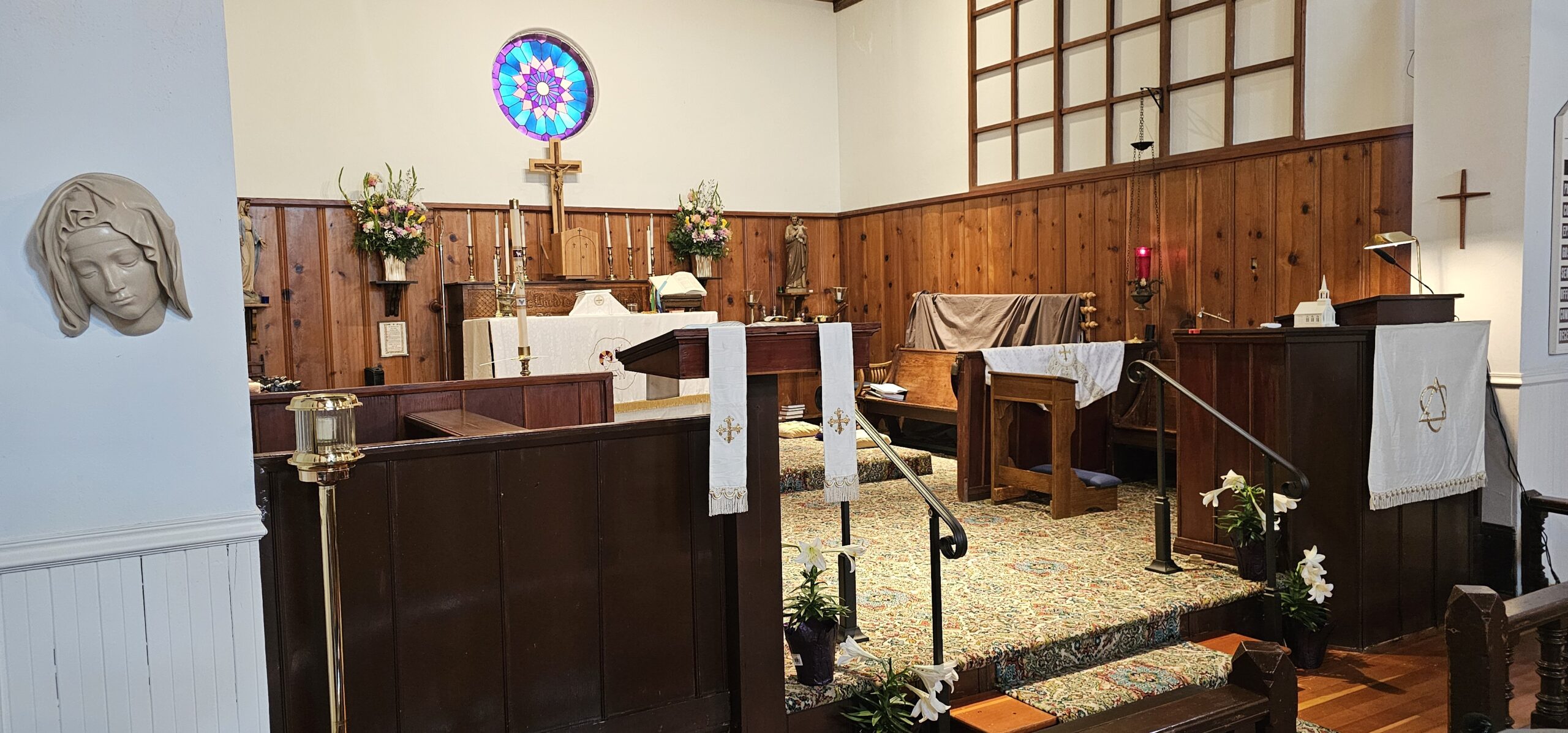
- Communion is received at the altar rail, kneeling or standing.
- Those not receiving may remain in the pew or come to the rail with arms crossed over the chest for a blessing.
Instituted by Christ
The Eucharist was instituted by Christ at the Last Supper and is celebrated in obedience to his command to his disciples.
The Real Presence
In the Eucharist, we receive not merely a reminder of Christ but Christ Himself. In the consecrated bread and wine, Christ is truly and really present and gives Himself to His people.
Who May Receive
Holy Communion is limited to baptized Christians who affirm the Real Presence of Christ in the Eucharist.
Receiving Communion
- Reception is at the altar rail, kneeling or standing.
- Reception may be under both kinds, by intinction, in the hands, or directly on the tongue, according to parish practice.
- Noncommunicants may remain in the pew or come to the rail with arms crossed over the chest for a blessing.
Preparation
The Prayer Book calls communicants to repentance, faith in Christ, amendment of life, and charity with their neighbors before receiving the Sacrament.
After Communion
After Communion, return to your pew for the conclusion of the service. Please remain in your place until the altar candles have been extinguished and the chancel is closed.
Visiting St. Mary’s
If you are coming for the first time, the visitor guide explains arrival, seating, service books, customs, accessibility, and what happens after Mass.