Why We Worship This Way
We use our bodies and all our senses as we worship God, proclaim His Kingdom, and give Him thanks and praise. The prayers, gestures, music, and ceremonial of the Mass express this worship.
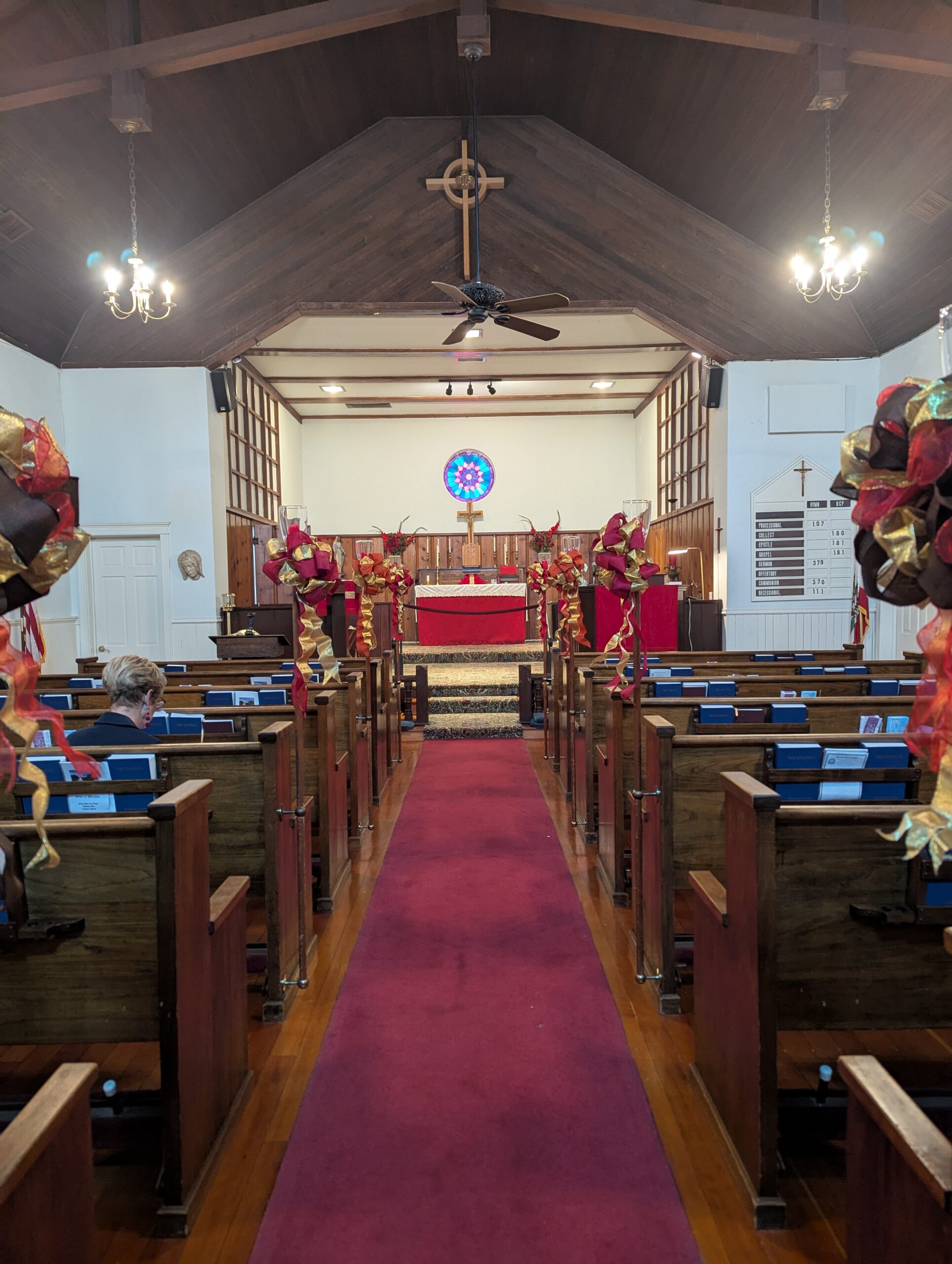
The Liturgical Year
The Church observes seasons centered upon the life and teachings of Jesus. Throughout the year, special days commemorate events in the life of Our Lord, His Blessed Mother, the Saints, and the Church.
Feast Days and Liturgical Colors
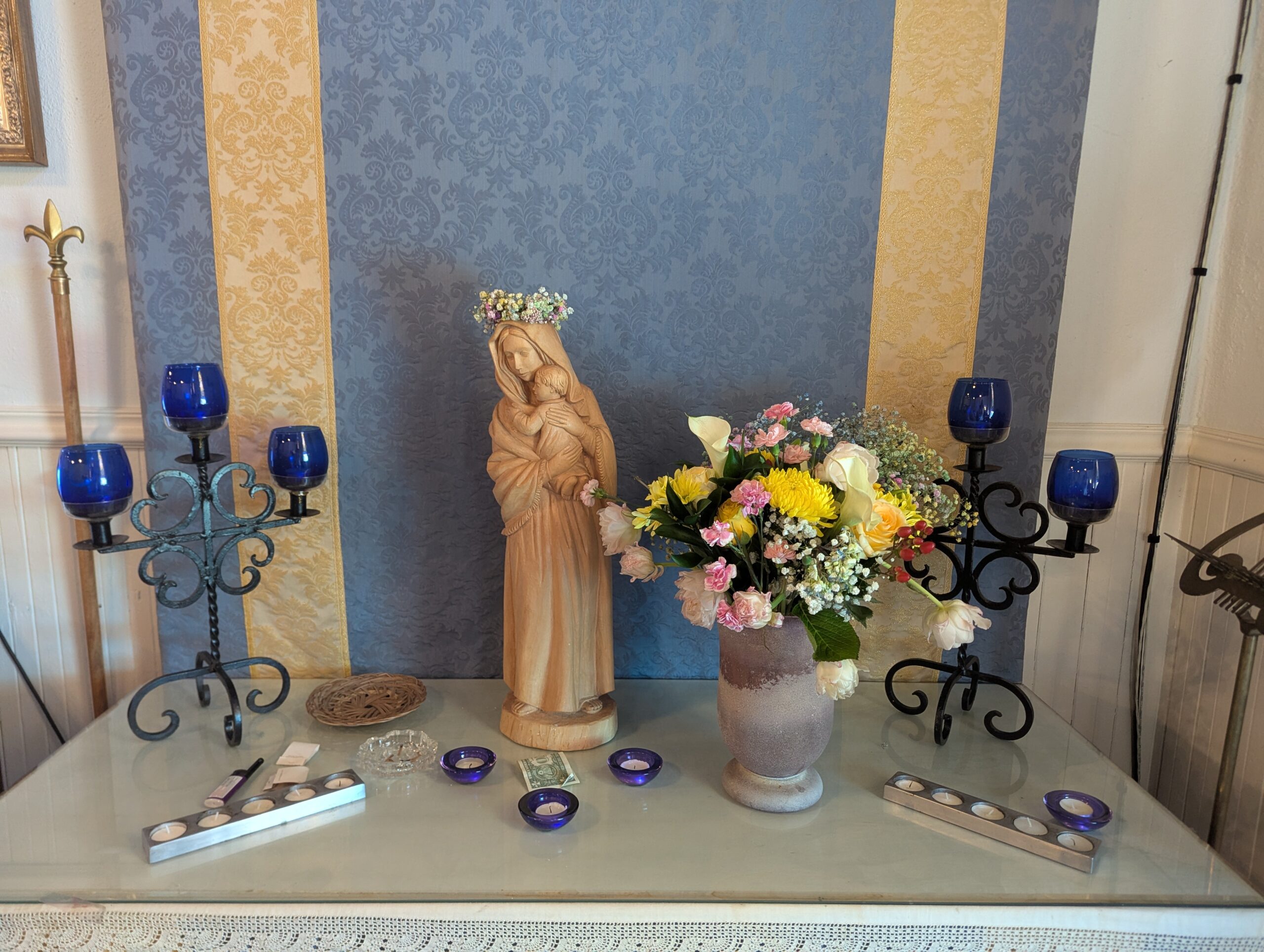
The colors of vestments and church appointments reflect the observance. Purple is used for penitential seasons such as Advent and Lent; white and gold for joyful celebrations, especially the Incarnation and Resurrection. Green is associated with growth in the knowledge of God and His creation; red with martyrs and the Holy Ghost. Blue is sometimes used for Our Lady and may be used for Lent. Black is used on Good Friday and at Requiem Masses.
Holy Water and the Sign of the Cross
We use holy water in remembrance of Baptism, through which we are made members of the Body of Christ. The Sign of the Cross is made at various points during Mass, marked by ✠ in the missalette. Visitors unfamiliar with these customs are welcome to learn them over time.
Bowing and Genuflection
We bow our heads at the Holy Name of Jesus and during the Gloria Patri. A genuflection is made by kneeling on the right knee before Christ present in the Blessed Sacrament. We also genuflect at the profession of the Incarnation in the Creed, in thanksgiving for God becoming man.
Incense, Bells, and Candles
Incense recalls the presence of God and signifies our prayers rising before Him and the sanctification of our offering. Bells call our attention, in body, mind, and spirit, to particularly sacred moments of the Mass. Candles recall Christ, the Light of the World; the two Eucharistic candles also represent His divine and human natures.
Music
We raise our voices together in worship. Singing unites the congregation in prayer and praise. St. Mary’s uses the Hymnal 1940, with Low, Choral, and High Mass according to the calendar and season.
1928 Book of Common Prayer
The 1928 American Book of Common Prayer provides the parish with its Prayer Book inheritance: the Daily Offices, sacramental rites, collects, psalms, and the characteristic language and theology of traditional Anglican worship.
Anglican Missal
The Anglican Missal tradition supplements the Prayer Book with the fuller ceremonial and devotional forms historically used in Anglo-Catholic worship. At St. Mary’s, the Prayer Book and Missal are used together rather than as competing systems.
Scripture in the Mass
The Mass is saturated with Scripture: in the lessons, psalms, Gospel, prayers, responses, and ordinary of the service. The parish also uses the King James Version of the Holy Bible in its traditional worship.
The Eucharist and Real Presence
In the Eucharist, we receive not merely a reminder of Christ but Christ Himself. In the consecrated bread and wine, Christ is truly and really present and gives Himself to His people.
Congregational Participation
Participation includes spoken prayer, singing, attentive listening, standing, kneeling, silence, and receiving the Sacrament. Visitors need not master the service before attending. The books and weekly service materials are provided to help.
After Communion, return to your pew for the conclusion of the service. Please remain in your place until the altar candles have been extinguished and the chancel is closed.
Anglican Identity
St. Mary’s belongs to the Anglican tradition: neither Roman Catholic nor Evangelical Protestant. Its worship stands within the Catholic inheritance of the English Church and the faith of the One, Holy, Catholic, and Apostolic Church.